-


-
 Royal Indian Elegance DiningAuthentic Indian Restaurant in Hanoi at Grand Plaza Hotel
 -
 A Royal Taste of India,Now in the Heart of Hanoi.
Jeera Rice, Lemon Rice or Curd Rice: Which Indian Rice Dish Should You Try?
Table of Contents
- Key takeaways
- Why do Indian rice dishes deserve their own spotlight?
- Jeera rice: The comfort classic
- Lemon rice: The South Indian zing
- Curd rice: The cooling finisher
- Jeera rice vs lemon rice vs curd rice: comparison table
- Which one should you order first?
- Where to try these dishes in Hanoi?
- Final thoughts
- Frequently asked questions
If one seeks out something warm and aromatic, jeera rice is the best option. On the other hand, if one opts for something tangy and potently spicy, lemon rice is the way to go. In case one is looking for a cooling dish to have after a heavy meal, curd rice will do the job.
Whenever someone is trying Indian food for the first time, jeera rice is usually the best as it is not spicy and goes well with any curry dish. At the restaurant Royal Rasoi, which is among the finest places for Indian food in Cau Giay, one can have all three of these dishes.
Key takeaways
- Jeera rice is a mild dish, which makes it suitable for new cooks. It also complements rich curries from North India.
- For those looking for vegan rice dishes, lemon rice is a gluten-free dish that is best suited for vegetarian lovers.
- Curd rice is cooled to aid digestion and prevent stomach upsets after spicy meals.
- Royal Rasoi in Cau Giay offers all three varieties of rice dishes on the same menu.
Why do Indian rice dishes deserve their own spotlight?
In India, rice is not simply an accompaniment to curry. Rice assumes various forms in different parts of India, as reflected in the three varieties of rice covered in this article that hail from completely different cultures.
However, Jeera rice is made through the traditional North Indian method of tossing jeera, or cumin seeds, in ghee prior to adding rice to it. Lemon rice and curd rice both come from the southern part of India, particularly in Tamil Nadu and Karnataka, where rice is consumed at most meals, and consequently people need different ways to eat it.
The unique selling point of these rice dishes is that they can be easily made without spending a lot of time on cooking. They are popular choices among people, which is one of the reasons they are usually among the first dishes that people ask for in any Indian restaurant. The best Indian restaurant near Grand Plaza Hotel Hanoi is one that people visit first to taste the delicious rice options.
Jeera rice: The comfort classic
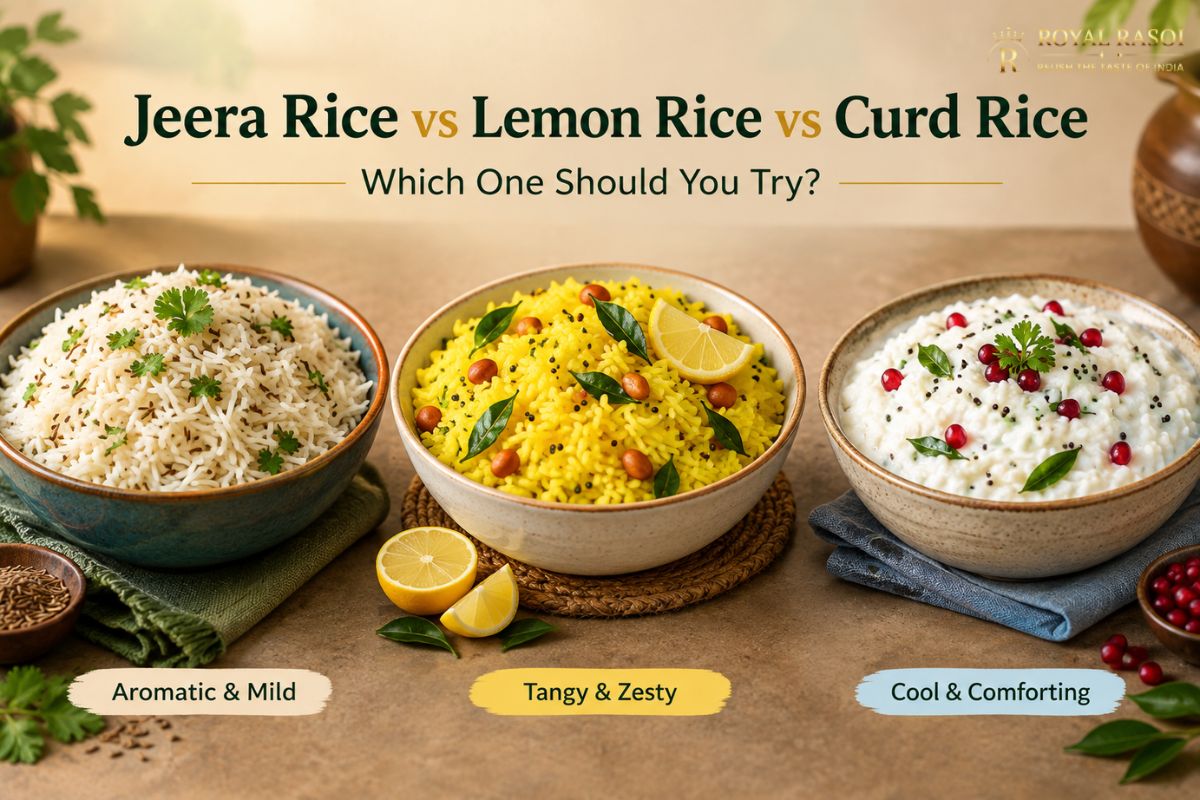
Jeera rice is a form of basmati rice seasoned with whole cumin seeds, often in ghee or oil and sometimes with a bay leaf or cinnamon stick for flavor enhancement. It does not have a bite; it is simply warm; its aroma is delightful, and it is delicious with almost any food.
Reasons for ordering:
- Good for kids and those who don’t want heavy spices
- Compatible with rich curries such as butter chicken, paneer makhani, and dal makhani
- Common comfort food in many North Indian households
If you are unfamiliar with Indian cuisine and are unsure about how spicy it might get, jeera rice is a safe bet. It is also a very popular order in Indian restaurants in Hanoi since it goes well with the gravies.
Nutritional note
A regular portion of jeera rice (about 200 g) has around 250-280 calories. The amount of ghee used makes the difference. Cumin is widely used in Indian kitchens because it helps with digestion, which is probably why it was paired with rice in the first place, particularly after a heavy meal.
Lemon rice: The South Indian zing
Lemon rice, named elumichai sadam in Tamil, is made by cooking rice and adding mustard seeds, curry leaves, turmeric, green chili, peanuts, and squeezing fresh lemon juice into it. The end product is bright yellow and tangy, with a bit of spice and crunch from the use of peanuts and lentils in the seasoning.
Why lemon rice is different:
- It is vegetarian and gluten-free in nature
- It can be eaten at room temperature and cold, hence making it suitable to be taken in the lunch box or eaten while traveling
- It can be made in South Indian festivals like Ugadi.
Therefore, it is also the best option if you are constructing a plant-based meal. If you are searching for the best Indian vegetarian restaurants in Hanoi, you should usually try lemon rice as one of the items on your menu, given that it does not include either dairy or meat stock.
Practical tips
One of the reasons why lemon rice tastes better after resting for 15-20 minutes is the fusion of flavors from the lemon juice. In other words, when the food is served at an acceptable temperature, you should not be worried that it has cooled down.
Curd rice: The cooling finisher
Curd rice (thayir sadam) refers to rice that is mashed. This is prepared by mixing the rice with yogurt and seasoning with mustard seeds, curry leaves, and, sometimes, adding pomegranate seeds or grapes for sweetness. It is served as the final dish in a South Indian meal to cool the palate and help with digestion after its spicy counterparts.
Reasons why curd rice is so popular among the community:
- Very mild and almost dessert-like in nature
- Probiotics contained in the yogurt are helpful for the gut.
- Most prefer this dish when they are unwell or want something calm.
Curd rice by no means is flashy or pretentious. It is a dish that is ordered whenever the mouth needs a break from the chilies and the stomach needs something to digest.
Jeera rice vs lemon rice vs curd rice: comparison table
| Feature | Jeera Rice | Lemon Rice | Curd Rice |
|---|---|---|---|
| Flavor Profile | Mild, nutty, aromatic | Tangy, spicy, citrusy | Cool, mild, slightly sour |
| Origin | North India | Tamil Nadu, South India | Tamil Nadu, Karnataka |
| Best Paired With | Rich curries, dal | Standalone or with pickle | End of a spicy meal |
| Dietary Fit | Vegetarian (ghee-based) | Vegan, gluten-free | Vegetarian, contains dairy |
| Serving Temperature | Hot | Room temp or cold | Room temp or chilled |
| Good For | First-timers, comfort seekers | Spice lovers, vegans | Digestion, palate cleansing |
Which one should you order first?
There's no universally "correct" order, but if you're planning a full Indian meal, a common sequence works well: start with something mild like jeera rice alongside your main curry, and if you're building a South Indian-style thali, close the meal with curd rice.
Here's a simple way to decide, based on what you're craving:
- Craving comfort food? Go with jeera rice.
- Want something tangy and different? Order lemon rice.
- Just finished something spicy and need relief? Curd rice is your dish.
- Cooking at home and short on time? Lemon rice comes together fastest, usually under 20 minutes.
Moreover, there's also nothing wrong with ordering all three in smaller portions if the restaurant allows it. Many places serving authentic South and North Indian food will happily do half-portions so you can taste the range in one sitting.
Where to try these dishes in Hanoi?
Hanoi's Indian food scene has expanded over the past few years, and Cau Giay in particular has become something of a hub for it. If you're searching for the best Indian food in Cau Giay, Royal Rasoi is one of the names that keeps coming up, serving both North and South Indian dishes under one roof, including jeera rice, lemon rice, and curd rice.
Its location makes it convenient. Royal Rasoi sits close enough to major landmarks to serve as an Indian restaurant near Grand Plaza Hotel Hanoi, making it an easy stop whether you're staying nearby for work or exploring the area. For travelers or expats who don't want to trek across the city for a proper thali, that proximity matters more than people expect.
Furthermore, if your priority is finding solid vegetarian options rather than a specific rice dish, Royal Rasoi is also a good pick among the best Indian vegetarian restaurants in Hanoi, with a menu that covers vegan and Jain requests alongside standard vegetarian dishes. And because the kitchen covers both regional styles, it works well as a North Indian restaurant in Hanoi too, with butter chicken, dal makhani, and naan sitting on the same menu as the South Indian rice dishes covered here.
For anyone still deciding between Cau Giay's Indian restaurants, checking whether a place serves all three rice dishes (jeera, lemon, and curd) is a decent litmus test. It usually signals a kitchen that understands more than one regional cuisine, rather than one that's only replicating a narrow set of North Indian dishes for a general audience.
Final thoughts
None of these three dishes is objectively "better" than the others; they're built for different moods and different parts of a meal. Jeera rice comforts, lemon rice wakes up your palate, and curd rice cools things down when you need it. The real answer to which one you should try depends on what you're in the mood for that day.
If you're in Hanoi and want to try all three without guessing which restaurant does them justice, Royal Rasoi is a solid place to start. It's built a name for the best Indian food in Cau Giay by keeping both North and South Indian cooking on the same menu instead of picking one and diluting the other. Stop by, order a small portion of each, and decide for yourself which one becomes your go-to.
Frequently asked questions
1. Is jeera rice the same as plain rice?
No. Jeera rice is tempered with roasted cumin seeds and often ghee, giving it a nutty aroma. Plain rice has no seasoning added during cooking.
2. Can I eat lemon rice on its own without a side dish?
Yes. Lemon rice is often eaten alone, especially as a packed lunch, since the peanuts and lentils give it enough texture and protein to feel complete.
3. Is curd rice served hot or cold?
Curd rice is almost always served at room temperature or chilled. Heating it can curdle the yogurt and change the texture unpleasantly.
4. Which rice dish is the healthiest?
Curd rice tends to be the lightest option due to the probiotics in yogurt, though lemon rice is a close second for its vegan, low-fat profile.
5. Can vegans eat all three dishes?
Lemon rice is naturally vegan. Jeera rice can be made vegan by swapping ghee for oil, and curd rice requires a plant-based yogurt substitute to qualify.
6. Do these dishes contain gluten?
All three are naturally gluten-free since they're rice-based, provided no wheat-based thickeners or sauces are added during preparation.
7. What's the difference between South Indian and North Indian rice dishes?
North Indian rice dishes like jeera rice lean on ghee and whole spices for warmth. South Indian dishes like lemon and curd rice use tempering with mustard seeds and curry leaves for tang and freshness.
8. Can I order all three dishes together at Royal Rasoi?
Yes, Royal Rasoi offers all three rice preparations, and smaller portion requests are usually accommodated so you can sample more than one dish per visit.
9. Is curd rice good for an upset stomach?
Yes. Curd rice is a common home remedy in South India for mild stomach discomfort, thanks to the probiotics and its gentle, non-spicy nature.
10. Which dish is best for someone trying Indian food for the first time?
Jeera rice is usually the safest starting point since it's mild, familiar in texture, and doesn't carry the tang or spice level of lemon or curd rice.