North Indian vs South Indian Food: What Can You Try in Hanoi?
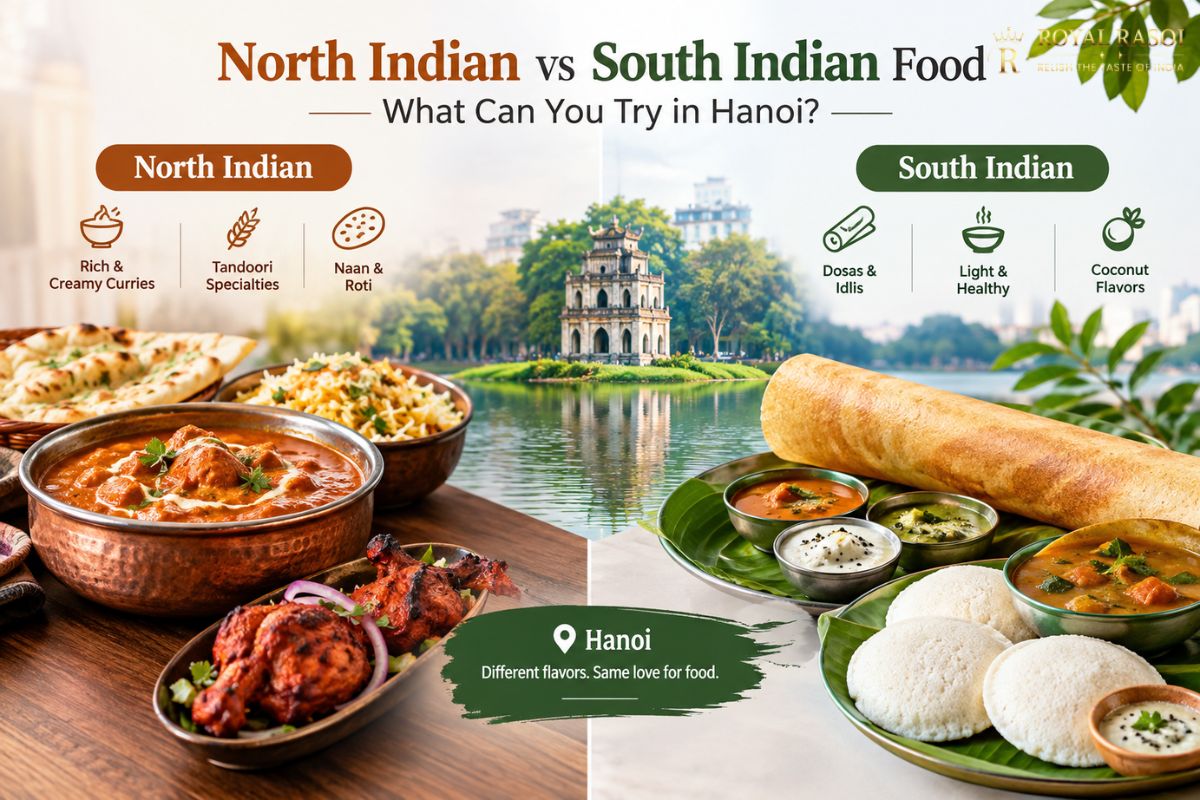
South Indian cuisine and North Indian cuisine are not competing against each other but simply answering wider and different questions. North Indian cooking is based on the use of wheat and milk while it develops the flavors slowly. However, naan and palak paneer can be used as examples. On the contrary, South Indian food is based on rice and fermentation, therefore creating lighter and tangier meals, including dosas and idlis.
As such, there is a variety of foods in Hanoi, which allows one to avoid eating only one kind of cuisine. A delicious, rich, and buttery meal is something you can try in a North Indian restaurant in Hanoi; if you prefer something crispy served as a breakfast, you may want to refer to a South Indian restaurant in Hanoi. Since 2019, the number of Indian tourists in Hanoi has increased almost fivefold, and the menus in Hanoi restaurants reflect this tendency.
Key takeaways
- Food from North India is famous for its extensive use of wheat, dairy, and slow-cooked gravies.
- South Indian food is all about rice, fermentation, and lighter, sharper flavors.
- When it comes to tourism in India, this has helped popularize Indian cuisine in Hanoi beyond its usual hotspots.
- Cau Giay offers a variety of Indian food for all the expats and students who live there.
North Indian food in Hanoi explained
This is what most non-Indians picture when someone says "Indian food." Butter chicken, naan, tandoori kebabs, paneer swimming in a thick red gravy. The style traces back to Punjab and Delhi, where wheat grows better than rice, so bread carries the meal instead of a bowl of rice.
The gravies are heavy on cream, ghee, and yogurt, and that's exactly why they taste rounder and richer than what you'd get further south. Tandoor cooking is the other signature move here, a clay oven fired hot enough to char naan and kebabs in minutes.
Moreover, a decent North Indian restaurant in Hanoi is committing to a slower kitchen. Dal makhani needs hours on low heat before the lentils actually break down, and there's no shortcut for that. Portions run big too, built to be shared over rice or bread rather than eaten alone at a desk.
What to order first
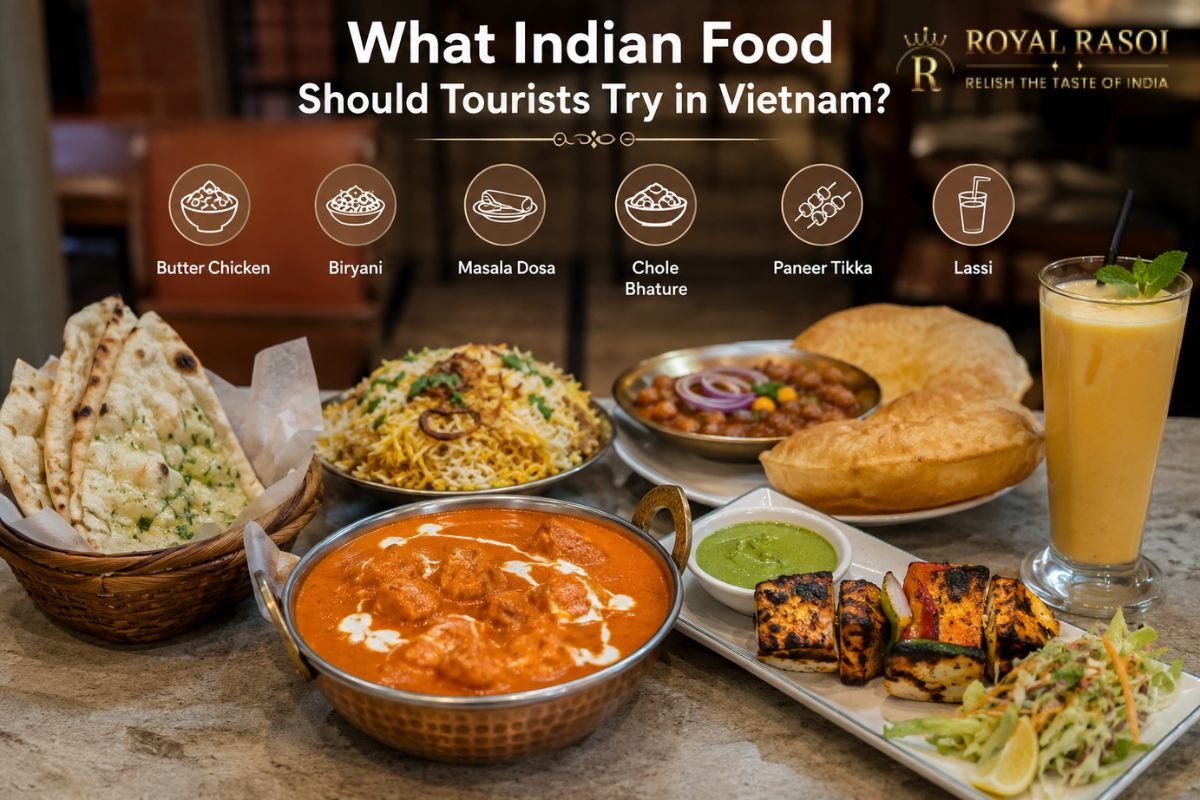
Butter chicken and garlic naan, honestly. It's the safest order and still shows what the cuisine is capable of. If you want to skip the obvious pick, rogan josh is a slow-cooked lamb curry worth trying, or go for chole bhature, which is really street food dressed up: fried bread with spiced chickpeas.
South Indian cuisine and its flavors
South Indian cooking comes out of Tamil Nadu, Kerala, Karnataka, and Andhra Pradesh, and it doesn't share much logic with the north. Rice replaces wheat entirely. Fermentation shows up in the dosa batter, in pickles, in curd rice, in places you wouldn't expect. Tamarind, curry leaves, mustard seeds, and coconut do the work that cream does up north.
The best South Indian restaurant in Hanoi needs a real dosa station, full stop. Dosas are what most people know the region for, thin rice-and-lentil crepes that come with sambar (a tangy lentil stew) and coconut chutney by default, not as an add-on. Thalis, the divided plates with six or seven small dishes, are also common here and worth ordering if you can't decide what to get.
Therefore, people assume South Indian means mild. It doesn't. Andhra cooking specifically can out-spice most North Indian dishes, just through chili instead of cream.
What to order first
A plain or masala dosa with filter coffee covers it. If a place actually does a Kerala sadya, a full multi-course vegetarian meal, save that for a weekend when you're not in a rush.
Key differences side by side
| Factor | North Indian | South Indian |
|---|---|---|
| Staple grain | Wheat (bread-based) | Rice |
| Cooking base | Cream, ghee, yogurt | Coconut, tamarind, curry leaves |
| Texture | Thick, rich gravies | Lighter, tangier, often fermented |
| Signature dishes | Butter chicken, dal makhani, naan | Dosa, idli, sambar |
| Typical spice style | Warm spices (cumin, garam masala) | Chili-forward, sourness from tamarind |
| Best for | A heavier, indulgent dinner | A lighter meal or quick breakfast |
Where to find great Indian food?
A few years ago, best Indian restaurants in Hanoi meant picking from two or three spots near the Old Quarter and hoping for the best. That's not really true anymore. Indian arrivals to Vietnam jumped over 70% year-on-year in early 2026, per Vietnam's tourism authority, and restaurants responded by actually building out regional menus instead of running one generic "Indian" section.
Furthermore, most kitchens still default to North Indian, since it's the more familiar entry point for people who've never had Indian food before. But if you're genuinely searching for the best Indian restaurants in Hanoi, a couple of places should turn up with a real South Indian section too, not one dosa tacked onto the end of a North Indian menu.
One test that actually works: ask if the dosa batter is made in-house or bought pre-mixed. Kitchens fermenting their own batter tend to care about the South Indian side, not just listing it.
Delicious Indian food in Cau Giay
Cau Giay has quietly turned into a reliable spot for the best Indian food in Cau Giay, mostly thanks to the Indian students, expats, and long-stay professionals who actually live in the area. That resident crowd, not tourists passing through once, is what keeps a kitchen's flavor and spice level honest over time.
Restaurants here often run both North and South Indian sections on one menu, which makes the neighborhood a good starting point if you haven't decided which style you want yet. It's also further from the tourist crush of the Old Quarter, so pricing and portions tend to match what locals expect rather than what a first-time visitor might tolerate.
If best Indian food in Cau Giay is what you're after, look for places willing to adjust spice on request instead of serving one fixed heat for everyone. That's usually a sign they're cooking for repeat customers, not first-timers.
Choosing between the two styles
Never had either? Start North Indian. It's the more familiar flavor profile, and butter chicken is forgiving even when a kitchen has an off night.
Already like rice-heavy meals, or trying to cut back on dairy? South Indian is the better fit, and it works better for breakfast or lunch since dosas sit lighter than a cream-based curry.
A lot of regular diners in Hanoi don't pick one permanently. North Indian on a weekend night, South Indian for a weekday lunch.
Common mistakes first-timers make
- Assuming all Indian food is spicy the same way. North Indian heat comes from garam masala and warm spices; South Indian heat usually comes straight from chili. They don't taste the same, even at similar spice levels.
- Skipping the sides. Sambar and chutney with a dosa aren't optional extras; they're how the dish is supposed to be eaten.
- Only ordering what you already know. Sticking to butter chicken every visit means missing whatever the kitchen actually does best.
- Not asking about spice level. Kitchens will adjust if you ask. They generally won't tone it down automatically just because you're a foreigner.
Expert tips before you order
- Ask which region the chef trained in. A lot of Indian restaurants abroad run one chef across a menu covering both regions, and one side is almost always stronger.
- If you can't decide, order a thali. It's the fastest way to taste several dishes from either cuisine without committing to one plate.
- Additionally, check whether rice comes separately from bread. North Indian meals often assume bread is the base starch, so rice might need to be requested.
Final thoughts
North and South Indian food come from different parts of the same country, and honestly, treating them as one cuisine never made much sense. Hanoi's Indian food scene has grown enough, on the back of a steady rise in Indian visitors and residents, that you can now try both properly instead of settling for whatever one menu happens to offer.
Royal Rasoi runs North and South Indian kitchens side by side, so if you're still deciding where to start, that's one way to compare both in a single visit instead of guessing which restaurant does which region well.
Frequently asked questions
1. What's the main difference between North and South Indian food?
Wheat and cream versus rice and fermentation, basically. North Indian gravies are dairy-heavy; South Indian cooking leans on coconut, tamarind, and fermented batters instead.
2. Is South Indian food less spicy than North Indian food?
No, and that's a common misconception. Andhra-style South Indian dishes can be hotter than most North Indian curries. It's the type of heat that differs, not the intensity.
3. What should I order at a North Indian restaurant in Hanoi for my first visit?
Butter chicken with garlic naan. It's the most representative dish and holds up even at a mediocre kitchen.
4. What is a thali?
A plate with several small dishes at once, usually rice or bread, two or three curries, a lentil dish, yogurt, and a pickle.
5. Why has Indian food become more common in Hanoi recently?
Indian tourist arrivals to Hanoi have grown roughly fivefold since 2019, thanks partly to new direct flights, and restaurants have expanded their menus to keep up.
6. Is Cau Giay a good area for authentic Indian food?
Yes. It has a real resident Indian community, and restaurants there cook for repeat customers rather than one-time tourists, which keeps quality more consistent.
7. Can I ask a restaurant to adjust the spice level?
Usually, yes. Most kitchens will adjust if you ask directly, so don't just assume the default serving matches your tolerance.
8. What's a good vegetarian option between the two cuisines?
South Indian food, generally. Dishes like dosas and idlis are naturally vegetarian since the cuisine relies far less on dairy and meat to begin with.
9. Do most Indian restaurants in Hanoi serve both cuisines?
Many do, though the South Indian side is sometimes an afterthought. Ask if the dosa batter is made fresh in-house; that usually tells you how seriously they take it.
10. Which cuisine is better for a first-time visitor to Indian food?
North Indian, mainly because the flavors are more globally familiar. South Indian food tends to click more on a second or third try, once your palate catches up.